
The 3 a.m. wake-up doctors keep calling 'just stress'
Falling asleep is fine. Staying asleep is the problem. For women over forty, the hour it happens is more informative than the fact that it happens.
You are not lying awake at midnight. You go down easily enough. Then your eyes open somewhere between two and four, wide awake, heart going slightly faster than it should be, and the next ninety minutes belong to whatever your brain decides to think about.
By the time the alarm goes you have had five broken hours and a full day ahead of them.
Why the hour matters
Insomnia at the start of the night usually means you cannot switch off. Waking in the small hours is a different mechanism: something is switching you back on.
Cortisol is meant to bottom out overnight and climb again before you wake. If it starts climbing at three instead of six, you wake at three. It is that literal.
Falling asleep is a wind-down problem. Waking at three is a wake-up-signal problem — and they do not respond to the same things.

What pushes it earlier
Falling progesterone. Progesterone is calming and sleep-supporting, and it is the first hormone to drop in perimenopause. Less of it means lighter sleep and a lower threshold for waking.
Blood sugar dipping overnight. If dinner was carb-heavy and early, the trough can land in the small hours — and the body's response to a low is to release cortisol and adrenaline. Which wakes you up.
A temperature spike. Night sweats do not have to be dramatic to break sleep. A small surge is enough to pull you out of a light stage.
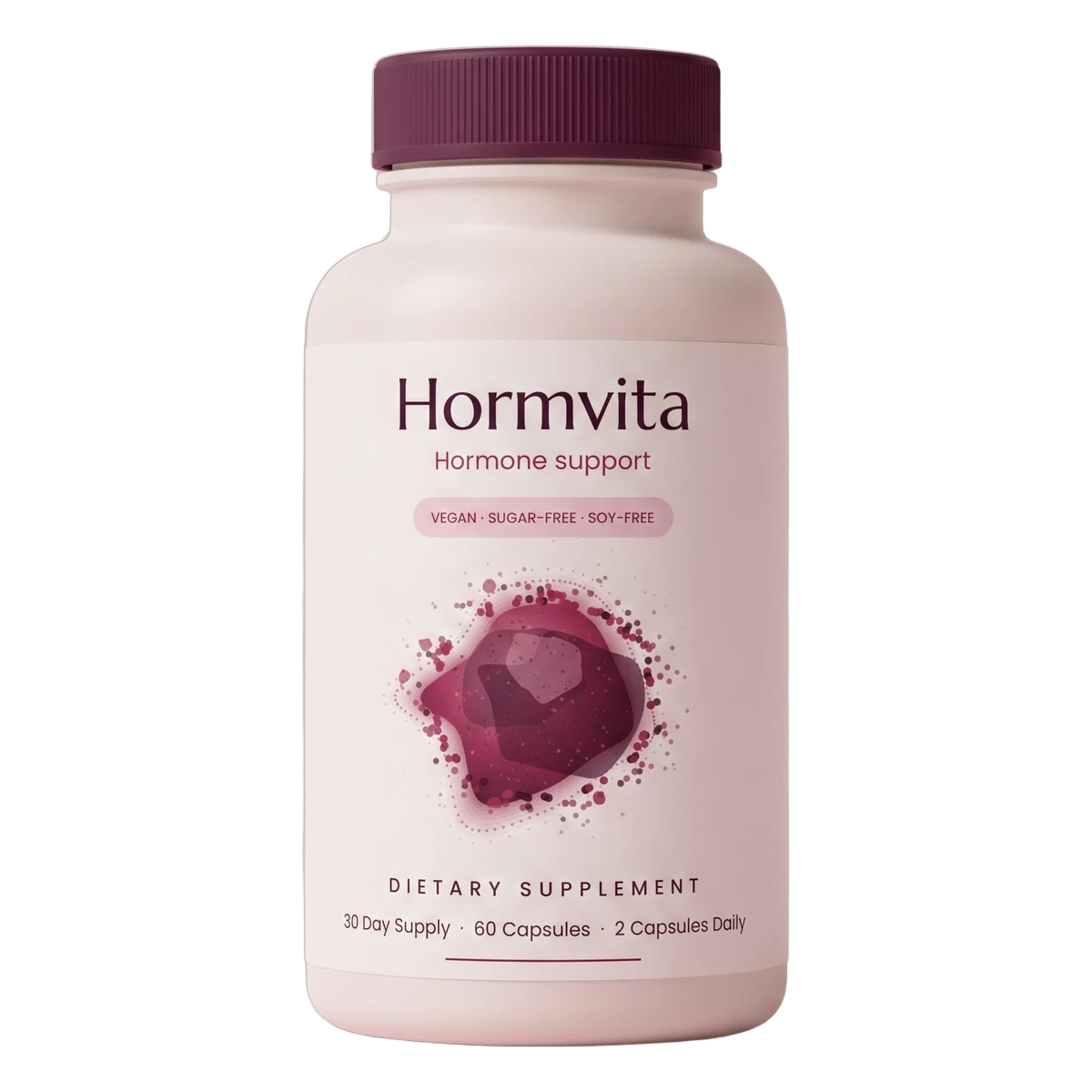
Try Hormvita risk-free for 14 days
One daily serving with 24 vitamins, minerals, amino acids and botanicals. Free shipping and a 14-day money-back guarantee.
14-day money-back guarantee · Free shipping
What tends to help
- Protein and some fat with your evening meal, so the overnight trough is shallower
- Keep the bedroom genuinely cool — a small temperature surge is enough to wake you from a light stage
- Replenish the nutrients the stress response runs on, especially magnesium, zinc and vitamin B6
- Do not check the time when you wake. Knowing it is 3:14 reliably makes the next hour worse
When it is not this
Loud snoring, gasping, or waking unrefreshed no matter how long you were in bed can point to sleep apnoea, which is common in women over forty and routinely missed. That needs a proper assessment, not a supplement. Same if you are pregnant, breastfeeding, or on prescription medication — check with your doctor or pharmacist first.
These statements have not been evaluated by the Food and Drug Administration. This product is not intended to diagnose, treat, cure or prevent any disease. Individual results vary. Consult your healthcare provider before starting any supplement.
Ready to get the second half of the night back?
Join 98,000+ women who stopped blaming their willpower and started supporting their hormones.
14-day money-back guarantee · Free shipping
Comments (5)
Between 3 and 3:30 every single night for two years. My GP said stress and offered nothing else. Nobody once asked what time.
Marianne — the hour really is the useful detail, and it is the one that most often gets left out of the conversation. Any questions, support@hormvita.com.
Eating actual protein at dinner instead of a salad at 6pm has made more difference than anything else I have tried.
Not fixed but I am getting through to about 5 most nights now, which after two years feels like a lot.
The bit about not looking at the clock is annoyingly correct.
Comments are submitted by verified customers and shown with permission.
Save up to 60% on your first order
Join 98,000+ women who stopped blaming their willpower and started supporting their hormones.
Offer ends in 00:00:00
14-day money-back guarantee · Free shipping · Cancel anytime